Track vs. Wheeled Excavator on Residential Sites: What Road Widening Taught Austin Hardy
When you’re widening a road through a residential area, the work rarely happens in one place. Equipment needs to move between the work zone, staging areas and different sections of the project, often while navigating narrow streets, overhead utilities, driveways and other site constraints.
For Austin Hardy, owner and operator of Method Excavation, that type of work has highlighted where a wheeled excavator can make a difference.
Austin has been running a Volvo EWR150F equipped with a Steelwrist XTR20 tilt rotator on a road widening project in Matthews, North Carolina. For him, the combination of mobility, compact dimensions and attachment versatility has created more opportunities to keep work moving throughout the day.
Tracked vs. Wheeled Excavators: It Depends on the Site
Tracked excavators have long been a standard choice for excavation work, offering stability and the ability to work across a wide range of terrain and ground conditions. But residential road widening presents a different set of challenges.
Work can take place in tight residential streets and work areas, with equipment frequently moving between different sections of the project. Materials may need to be transported from a staging area, while operators also need to work around overhead utilities and other site constraints.
That’s where Austin has found an advantage in the wheeled platform.
“One of my favorite things about this platform — especially the EWR series — is the compact radius working in tight narrow streets. Having a wheeled excavator platform with the speed and mobility to move around and navigate various jobsites and streets very quickly and rapidly has helped increase productivity throughout the day and allowed me to be more flexible, help out the guys on the ground, and speed up the process we’re working on every day.”
The benefit isn’t simply being able to travel from one point to another. For Austin, that mobility gives him more flexibility to support the rest of the crew as the needs of the job change.
Instead of being tied to one work area, he can move where he’s needed, help team members on the ground and keep material moving throughout the day.
Mobility That Keeps the Job Moving
One of the biggest differences Austin has experienced is how the EWR150F fits into the flow of the jobsite.
He has used the machine to move two sticks of 15-inch RCP at a time while traveling between areas of the project. =
“This EWR150 is super stable carrying around 2x sticks of 15″ RCP while being able to move at 15 to 20 mph, something I wouldn’t dare take the time to do with my tracked excavator.”
The EWR150F’s two-piece boom also gives Austin another way to adapt the machine to the conditions around him. By tucking the boom in, he can help keep the machine’s ride height down while maintaining the bucket, forks or other tool at a practical height.
On a residential street where overhead utilities and other obstacles can affect equipment movement, those considerations can make a difference in how efficiently the machine can navigate the site.
And the machine isn’t limited to the major tasks.
As Austin put it: “Maybe not quite the largest, but still beats a shovel and a broom for some quick midday cleanup work.”
It’s a small example, but it illustrates the larger point: the more easily one machine can move between tasks, the more ways an operator can put it to work throughout the day.
More Attachments, More Ways to Help the Crew
The EWR150F’s mobility is only part of the equation.
Paired with a Steelwrist XTR20 tilt rotator and Austin’s existing attachment lineup, the machine has allowed him to take on a wider range of tasks with a single machine.
“The versatility of this wheeled excavator continues to amaze me in just how capable of a machine it is, especially combined with a tiltrotator + array of attachments I have. In the relatively short time I’ve had the machine to demo so far, I think I’ve used more attachments and done more work with only one machine than I’ve ever done before.”
The tilt rotator adds another layer of flexibility, giving Austin more options for using his attachments across different tasks.
For a residential project, where the work can change quickly from excavation to material handling, grading, cleanup and other support tasks, that versatility can help an operator respond to what the crew needs next.
Efficiency Goes Beyond Travel Speed
For Austin, the value of the wheeled excavator comes down to more than how quickly it can travel.
It’s about what that mobility makes possible.
A machine that can move efficiently around the jobsite gives an operator more opportunities to help the ground crew, move materials, switch between tasks and keep work progressing.
Austin’s experience with the EWR150F has also reinforced his view that wheeled excavators have a place in more applications than many U.S. contractors may realize.
“I’ve run a lot of machines. This is the one I’ve been waiting for the US market to catch up on.”
Uptime and Support Matter, Too
Equipment performance is only part of keeping a project moving. The support behind the machine matters when contractors are relying on equipment to perform day after day.
For Austin, the EWR150F demo has provided an opportunity to put the machine through a range of real jobsite applications while working with the dealer team behind it.
That combination of machine capability, attachment versatility and dealer support is an important part of keeping equipment productive in the field. When a machine is being used across multiple tasks, access to knowledgeable service and support can help contractors address issues and keep work moving.
When Does a Wheeled Excavator Make Sense?
There’s no single excavator configuration that’s right for every job.
Tracked excavators remain a strong fit for applications where stability, digging conditions and terrain are the primary considerations. But for contractors working in environments where equipment needs to move frequently between work areas, navigate paved streets or tight work areas, and perform a variety of tasks throughout the day, a wheeled excavator can offer a different set of capabilities.
For Austin, a residential road widening project has been a real-world demonstration of what’s possible.
With the Volvo EWR150F, Steelwrist tilt rotator and multiple attachments, he’s been able to move quickly, support his ground crew and put one machine to work across a wide range of tasks.
For contractors evaluating equipment for similar work, the question may come down to the demands of the jobsite: how often does the machine need to move, how many tasks does it need to handle, and how important is flexibility throughout the day?
See the EWR150F in Action
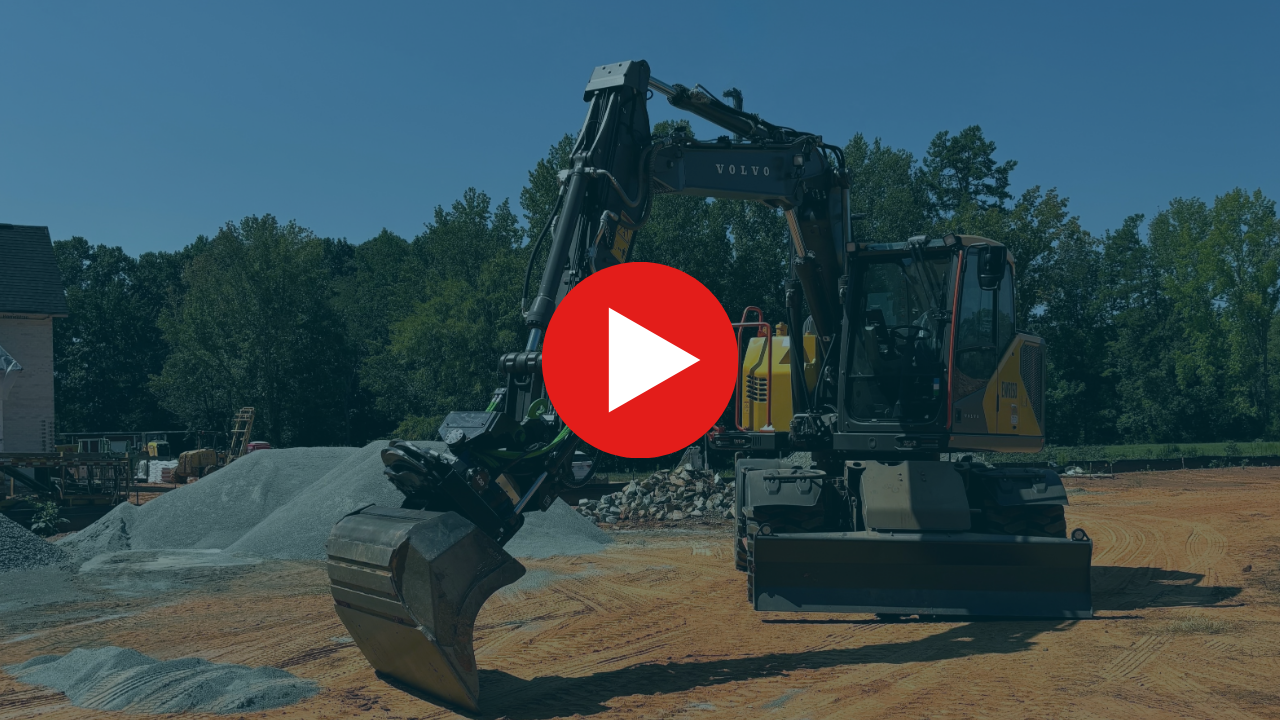
Want to see how Austin puts the EWR150F to work? Watch the video to see the machine in action on the road widening project, including how its mobility helps him support his team, keep work moving and get more out of a single machine.
The video also takes a closer look at efficiency, uptime and the dealer support behind the machine.