What Should You Expect When Taking Delivery of an ADT?
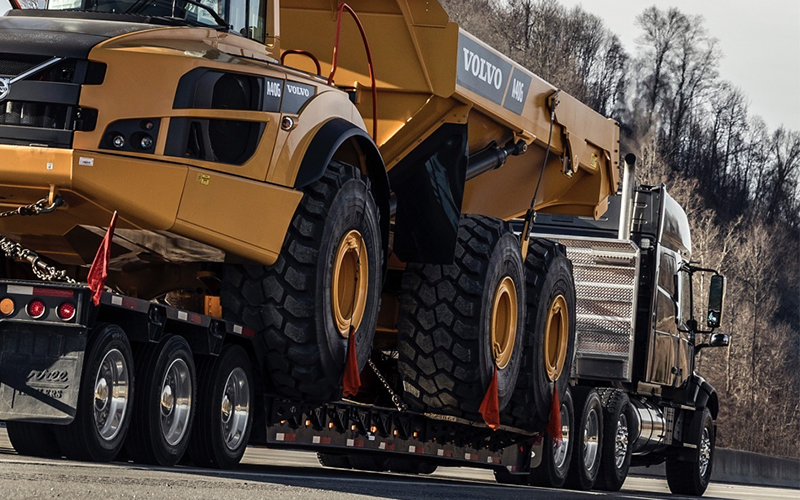
Taking delivery of an articulated dump truck (ADT) involves coordinating transportation, preparing the jobsite and confirming unloading arrangements. Volvo ADTs are transported on lowboy or removable gooseneck (RGN) trailers suited to the machine’s size and weight. The customer’s main responsibilities are ensuring the truck and trailer can access the drop-off point and that the site is ready for unloading.
A salesperson or customer success manager (CSM) is onsite for delivery to help with the handoff.
This guide explains what to expect when taking delivery of a Volvo ADT, including transportation requirements, scheduling, jobsite preparation and arrival inspections. The delivery process described reflects how Ascendum’s North Carolina and Tennessee teams coordinate hauling. Procedures may differ in other territories, and some customers transport equipment using their own trucks. An Ascendum salesperson can confirm the arrangements for each purchase.
Volvo ADT Delivery Requirements by Model
The size and weight of your ADT help determine the trailer needed for transport. The hauling provider, route and state regulations also affect delivery requirements.
| Volvo ADT Model | Rated Payload | Typical Transport Setup | Permit Requirements |
| A25 | 55,120lb | Tri-axle 35- to 50-ton lowboy/RGN or multi-axle lowboy/RGN | Oversize permit required; overweight permit rarely needed |
| A30 | 63,930lb | Tri-axle 35- to 50-ton lowboy/RGN or multi-axle lowboy/RGN | Oversize permit required; overweight permit rarely needed |
| A35 | 76,059lb | Tri-axle 35- to 50-ton lowboy/RGN or multi-axle lowboy/RGN | Oversize permit required; confirm overweight requirements |
| A40 | 85,980lb | Multi-axle 50-ton-or-higher lowboy/RGN | Oversize permit required; confirm overweight requirements |
| A45 | 92,594lb | Multi-axle 50-ton-or-higher lowboy/RGN | Oversize permit required; confirm overweight requirements |
| A60 | 121,250lb | Multi-axle 50-ton-or-higher lowboy/RGN | Oversize permit required; overweight requirements vary by trailer and state |
Transportation requirements, permits and delivery timelines vary by machine configuration, state and route. The delivery plan is confirmed during scheduling.
How Is an ADT Delivered?
After the purchase is approved, the delivery process begins with preparing the machine and coordinating transportation.
Before an ADT leaves the branch, the team completes a pre-delivery inspection (PDI), cleans the machine and installs any ordered options or attachments. The salesperson works with the customer to confirm the target delivery date, drop-off location and best onsite point of contact.
For deliveries coordinated by Ascendum’s North Carolina and Tennessee teams, inside sales typically arranges transportation with a third-party hauling provider. The team works with local haulers near its Concord, Asheville and Raleigh/Greenville hubs, as well as larger brokers and carriers serving multiple states. The selection depends on timing, price and confidence in the provider.
Some customers arrange their own hauling or transport equipment using their own trucks. The salesperson can confirm the arrangements that apply to each purchase.
Does Delivering an ADT Require a Permit?
Yes. All Volvo ADT models require oversize permits because of their width. Overweight permits depend on the machine, trailer and state regulations, and are rarely needed for the A25 and A30.
Trailer configuration can also affect transport requirements. Wide-tire ADTs and A60 models may require sideboards on a removable gooseneck (RGN) trailer to accommodate the machine’s width. Whether sideboards are needed depends on the specific trailer and driver.
Escort requirements and route restrictions can also affect the delivery plan. The applicable permit and route requirements should be confirmed with the hauling provider before transportation.
How Far in Advance Is ADT Delivery Scheduled?
Schedule delivery as early as possible once the paperwork is complete. Once the sale is approved and the machine is ready, hauling can typically be arranged within one to two business days, provided there are no scheduling constraints. Actual delivery timing depends on the distance, route, permits and hauler availability.
Ascendum’s North Carolina and Tennessee teams work with local haulers near their Concord, Asheville and Raleigh/Greenville hubs, as well as larger brokers and multistate carriers. Depending on availability and the delivery requirements, transportation may be arranged quickly or planned weeks or months in advance.
Several factors influence the timeline:
- Machine readiness: We complete the pre-delivery inspection, clean the machine and install any ordered options or attachments before delivery.
- Distance and route: Longer trips take more time, and road restrictions can affect the route a hauler can use.
- Permits and trailer availability: Oversize or overweight loads may require additional planning and specialized equipment.
- Jobsite schedule: Let your salesperson know when you need the machine so we can coordinate transportation around your project.
For example, a delivery from Ascendum’s Concord branch to Greensboro, North Carolina, may take roughly half a business day. A delivery from Concord to Knoxville, Tennessee, may take a full business day or longer, depending on the route, trailer requirements and hauler availability. These are estimates, not guaranteed delivery windows.
The salesperson will work with the customer to confirm the target delivery date and location, then coordinate transportation based on the customer’s needs and the hauling provider’s availability.
How Should You Prepare Your Jobsite for ADT Delivery?
Good communication and site preparation help make delivery day go smoothly. Before the hauler departs, confirm that the delivery location is accurate and that someone will be available to receive the machine.
Use this checklist to prepare:
- Confirm the delivery location: Provide the correct address or map pin, along with any directions the driver will need to reach the drop-off point.
- Check truck and trailer access: Share information about turns, narrow areas or other access restrictions that could affect the transport vehicle.
- Identify an unloading area: Confirm where the truck and trailer should position for unloading and share any relevant site conditions in advance.
- Flag known obstacles: Communicate overhead-clearance issues or other site restrictions before delivery is scheduled.
- Designate an onsite contact: Make sure the person receiving the machine can answer calls while the driver is en route and be available when the truck arrives.
- Communicate changes promptly: If the delivery location, site conditions or contact information changes, notify the salesperson as soon as possible.
Clear communication about the delivery location, site conditions and onsite contact helps reduce confusion and avoidable delays.
What Should You Check When the ADT Arrives?
Check for visible damage as soon as the machine has been safely unloaded. If anything looks wrong, notify the salesperson immediately so the issue can be documented and addressed.
Before every ADT leaves the branch, the team completes a delivery report that includes photographs, fuel and diesel exhaust fluid (DEF) checks, and the hauling company’s signature. Any damage identified before transport must be resolved before the machine leaves the yard. Haulers are also expected to report transit damage immediately.
When the truck arrives:
- Confirm unloading arrangements: Check ahead of delivery whether the driver or a customer employee will unload the machine.
- Keep the unloading area clear: Follow the unloading team’s safety instructions and keep people clear of the operation.
- Inspect the machine: Check for visible damage after safe unloading. Photograph any concerns and contact the salesperson immediately.
What Does the ADT Delivery Handoff Include?
A salesperson, customer success manager (CSM) or both will be onsite for delivery, whether the customer is receiving a new or used ADT.
Items such as warranty coverage, service agreements, telematics and parts support are discussed and arranged during the sales process, as applicable to the purchase. The Ascendum representative can help clarify the support available and who to contact with questions.
Operator training can also be coordinated based on the team’s experience. If the crew is new to Volvo ADTs or is receiving a new series of machines, the salesperson can arrange training through the service department for the machine’s arrival. Volvo may also provide formal operator training when multiple ADTs are delivered.
For used equipment, warranty coverage and other support depend on the terms of the purchase. Confirm these details with the salesperson before delivery.
Plan Your ADT Delivery With Ascendum
Planning ahead helps make ADT delivery more predictable. From confirming transport requirements to preparing your jobsite and coordinating the handoff, our team can help you understand what to expect.
Contact your Ascendum salesperson to discuss delivery arrangements, site readiness and scheduling for your Volvo ADT. For more information about heavy equipment transportation, read our 50-Ton Excavator Transport Guide.
Frequently Asked Questions About ADT Delivery
How much does an ADT weigh for transport?
Transport weight varies by model and configuration. Payload capacity describes how much material the machine can carry, not its empty weight. The hauling provider uses the machine’s transport specifications, trailer capacity and applicable weight restrictions to determine the appropriate setup. Confirm the machine’s transport weight when arranging delivery.
Can you drive an ADT on public roads?
Ascendum transports Volvo ADTs on lowboy or removable gooseneck (RGN) trailers for equipment delivery. Requirements for operating an ADT on public roads depend on applicable laws and regulations. Check with the appropriate transportation authorities before attempting to move an ADT under its own power.
Which ADT Models Require Oversize Permits?
All Volvo ADT models require oversize permits for transport because of their width. Overweight permits depend on the machine configuration, trailer and state regulations. Escort requirements may also vary by route.
Who is responsible for securing the ADT for transport?
Load securement arrangements should be confirmed with the selected hauling provider before transport. Contact the salesperson to clarify the arrangements for a specific delivery.
What should I do if my ADT arrives damaged?
Document the damage with photographs and notify the Ascendum salesperson immediately. The team can help document the issue and coordinate next steps with the hauling provider, as applicable.